

From traditional remedies to modern skincare:
The story of bunga raya
Before Bunga Raya became Malaysia's national flower, it was already a familiar plant in traditional herbal practices.
Its leaves. Its flowers. Its roots.
Different parts of Hibiscus rosa-sinensis have been used traditionally across various cultures for different purposes, including topical applications for skin-related concerns. Long before skincare became a science-driven industry, people were already exploring what plants could offer.
Today, this familiar tropical botanical is attracting renewed scientific interest — not just for its traditional history, but for its phytochemicals, polysaccharides, and potential skin-conditioning properties.
So what connects traditional Bunga Raya remedies to modern skincare? And what does science actually tell us about this botanical?
IN A GLANCE
Hibiscus rosa-sinensis, commonly known as Bunga Raya, has a long history of traditional medicinal use and is now being explored for its botanical and skincare potential.
Traditional practices have included topical applications of leaves and flowers for certain skin-related conditions. Modern research has investigated its phytochemical composition, antioxidant activity, and the moisturizing properties of its leaf-derived mucilage.
These findings provide an interesting scientific foundation for exploring Hibiscus in skincare — while recognising that traditional use and laboratory research are not equivalent to proven clinical benefits in humans.
Bunga Raya: More Than Malaysia's National Flower
Hibiscus rosa-sinensis belongs to the Malvaceae family and is widely cultivated throughout tropical and subtropical regions.
In Malaysia, it is known as Bunga Raya and became the national flower in 1960.
Its significance, however, extends beyond its ornamental beauty.
Across different traditional medicinal systems, various parts of the plant have been used for different purposes. Malaysian ethnobotanical records describe the traditional use of leaves and young flowers as poultices for boils and swelling, alongside other traditional applications involving the plant's roots and flowers.
These practices reflect generations of botanical knowledge, the kind of knowledge that often inspires modern scientific investigation.
What Did Traditional Practices Tell Us About Bunga Raya?
One particularly interesting aspect of Bunga Raya is its traditional topical use.
In some traditional practices, the leaves and flowers were applied externally to support the management of certain skin-related conditions.
Why these plant parts? One possible scientific connection lies in their naturally occurring compounds.
Hibiscus tissues contain various phytochemicals, while leaves are particularly interesting for their mucilage, a naturally occurring polysaccharide-rich substance with water-binding and gel-forming properties.
These characteristics have attracted attention in modern research, particularly in the development of moisturizing and skin-conditioning ingredients.
Traditional practices provide a starting point for investigation. Scientific research helps us understand which properties can be demonstrated, under what conditions, and how they might translate into skincare.
What Modern Science Has Discovered About Hibiscus
The story becomes particularly interesting when traditional botanical knowledge meets laboratory research.
1. Polysaccharides and Mucilage: The Moisture Story
One of the most studied properties of Hibiscus rosa-sinensis is its leaf-derived mucilage.
Mucilage is a polysaccharide-rich substance capable of absorbing water, swelling, and forming viscous or gel-like structures.
In a 2014 study, researchers characterised mucilage extracted from Hibiscus rosa-sinensis leaves and investigated its moisturizing effect using an experimental pig-skin model.
The results showed measurable short-term moisturization following application.
This makes Hibiscus leaf mucilage particularly interesting for skincare formulation, where moisture retention and skin conditioning are important considerations.
2. Antioxidant Phytochemicals: The Botanical Defence Story
Hibiscus contains naturally occurring phytochemicals, including flavonoids, phenolic compounds, and anthocyanins.
Research has demonstrated antioxidant activity in extracts of Hibiscus rosa-sinensis, including flower-derived phytochemicals and leaf extracts.
Antioxidants are relevant to skincare because oxidative stress contributes to environmental skin damage and visible signs of ageing.
However, antioxidant activity observed in laboratory assays does not automatically establish that a finished skincare product prevents skin ageing or provides clinical antioxidant protection.
It does provide a scientific reason to investigate Hibiscus as a botanical ingredient for skin-supportive formulations.
3. Skin Conditioning: Where Botanical Properties Meet Formulation Science
Moisture-binding polysaccharides and antioxidant phytochemicals make Hibiscus an interesting ingredient for modern skincare.
Depending on the extract and formulation, these botanical components contribute to:
- Skin hydration and moisture retention
- Improved skin suppleness
- A smoother-feeling skin surface
- Antioxidant support
- Skin conditioning
The final performance depends on the plant part used, extraction method, extract composition, concentration, and finished formulation.
This is where botanical science becomes formulation science.
From Traditional Botanical Knowledge to HIBICS
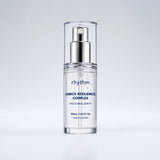
HIBICS takes inspiration from Hibiscus rosa-sinensis, a botanical familiar to Malaysian culture, yet still fascinating through the lens of modern skincare science.
The connection is more than the flower itself.
It is the idea that botanical knowledge can inspire contemporary formulation approaches when explored through scientific research.
Hibiscus brings an interesting combination of moisturizing potential and antioxidant phytochemicals into the skincare conversation.
And when considered alongside nighttime skincare, it offers a new perspective on how botanical ingredients can support hydration, skin conditioning, and resilience.
Not by replacing the skin's natural processes. But by supporting the skin through thoughtful formulation.
CONCLUSION
Bunga Raya has a story that extends beyond its role as Malaysia's national flower.
Its traditional uses reflect a long relationship between people and botanical resources. Modern research has begun exploring some of the properties behind that relationship, particularly the moisturizing potential of leaf mucilage and the antioxidant activity of its phytochemicals.
The journey from traditional remedies to modern skincare is not about assuming that everything used historically is scientifically proven.
It is about asking better questions, investigating botanical properties, and translating meaningful findings into responsible formulation science.
HIBICS. Inspired by Bunga Raya. Explored through skin science.
Frequently Asked Questions (FAQ)
1. What makes Hibiscus rosa-sinensis interesting for skincare?
Hibiscus rosa-sinensis contains diverse phytochemicals, including flavonoids, anthocyanins, tannins, and other phenolic compounds. These compounds contribute to its antioxidant potential and have been investigated for anti-inflammatory, wound-healing, and skin-conditioning properties.
2. Does Hibiscus rosa-sinensis support skin healing?
Research has explored the wound-healing potential of Hibiscus rosa-sinensis extracts. Preclinical studies have reported improvements in wound closure, epithelialisation, collagen deposition, and tissue tensile strength, highlighting its potential in skin-repair research.
3. Can Hibiscus rosa-sinensis support collagen formation?
Preclinical wound-healing studies have reported increased collagen-related parameters following treatment with certain Hibiscus rosa-sinensis extracts. These findings highlight its potential relevance to collagen-associated tissue repair and skin structural support.
4. What antioxidant properties does Hibiscus rosa-sinensis have?
Hibiscus contains flavonoids, anthocyanins, and other phenolic compounds associated with antioxidant activity. Studies of flower and leaf extracts have demonstrated free-radical-scavenging activity, making Hibiscus an interesting botanical for antioxidant skincare formulations.
5. Does Hibiscus rosa-sinensis have anti-inflammatory properties?
Research has investigated the anti-inflammatory activity of Hibiscus rosa-sinensis extracts. These properties contribute to its botanical interest in skin conditioning, soothing, and skin-resilience applications.
6. What is the moisturizing potential of Hibiscus rosa-sinensis?
Hibiscus leaves contain mucilage, a polysaccharide-rich substance with water-binding and film-forming properties. These characteristics make it valuable for exploring moisturizing formulations that support skin hydration, suppleness, and a smoother skin feel.
7. Has Hibiscus rosa-sinensis been studied in humans?
Yes. A 2019 pilot clinical study investigated a 4% Hibiscus rosa-sinensis leaf extract ointment as an adjunct to compression stockings in patients with venous leg ulcers. The study evaluated wound healing and safety, adding human clinical research to the botanical's existing laboratory and preclinical evidence.
8. Why is Hibiscus called Nature's Botox?
Hibiscus is popularly known as Nature's Botox for its association with smoother, plumper-looking skin. Its moisturizing and skin-conditioning properties help support skin suppleness and a smoother appearance, particularly when dehydration contributes to visible fine lines.
9. How does HIBICS bring Hibiscus into skincare?
HIBICS draws inspiration from Hibiscus rosa-sinensis, bringing its botanical story into modern nighttime skincare through hydration, skin conditioning, and antioxidant support. It represents a botanical approach to supporting skin moisture, comfort, and resilience as part of a nighttime skincare ritual.
A Familiar Flower. A New Perspective on Skincare.
Discover HIBICS, where botanical heritage meets modern nighttime skincare.
HIBICSMeet Our Experts
This article was reviewed by members of our scientific team.

Wellness note
This article is educational and is not intended to diagnose, treat, cure or prevent disease. RHYTHM's products should be used only as directed. Individual experiences may vary. Consult a qualified healthcare professional before use if pregnant, nursing, taking medication or under medical supervision.
Leave a comment
This site is protected by hCaptcha and the hCaptcha Privacy Policy and Terms of Service apply.